
Article—
Intimate Partner Homicide in Australia Continues Long-Term Decline, But Work Remains
Recent Australian homicide data shows intimate partner homicide rates have steadily declined over recent decades. Learn what is working and why prevention remains essential.
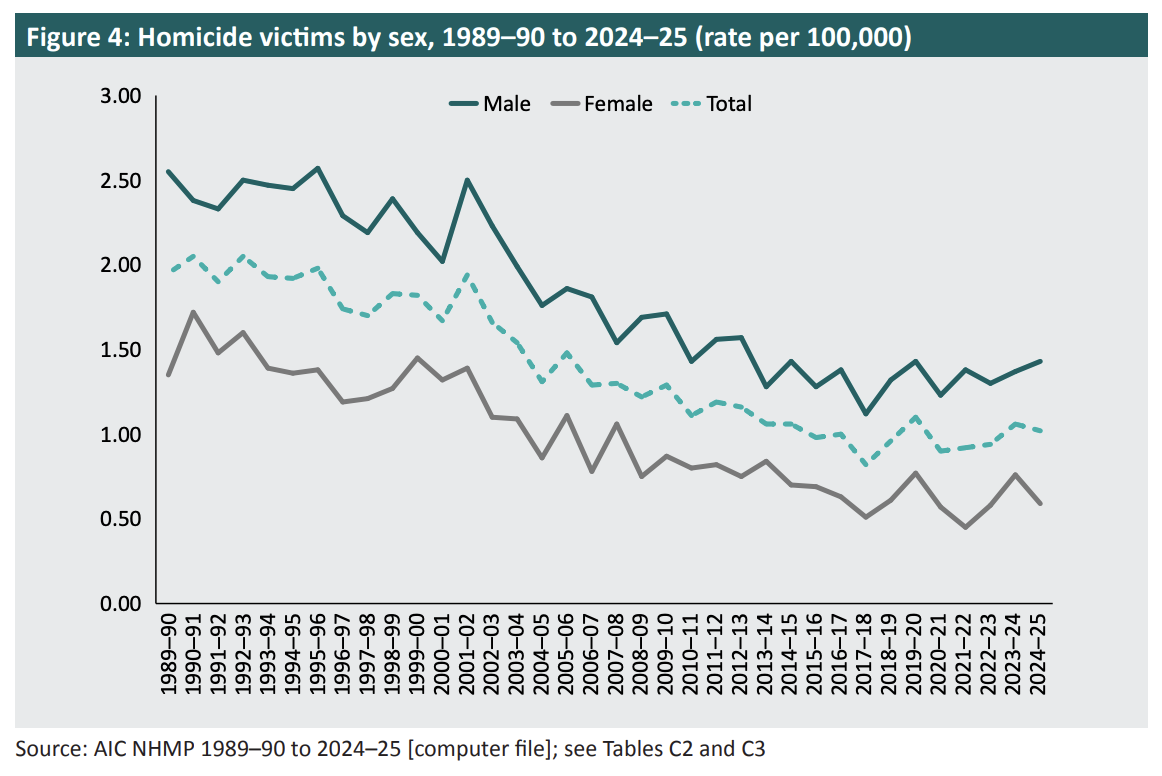
Recent data from the Australian Institute of Criminology's Homicide in Australia 2024–25 report provides an important reminder that while intimate partner homicide remains a serious issue, Australia has made significant progress over the past several decades.
The long-term trend shows that intimate partner homicide rates have steadily declined since the late 1980s and early 1990s. This reduction reflects a combination of factors, including greater public awareness, improved policing responses, stronger legal protections, enhanced support services, and a broader societal willingness to discuss family and domestic violence.
For organisations committed to reducing violence and supporting healthier relationships, these figures demonstrate that prevention efforts can and do make a difference.
Progress Should Be Recognised
Public discussion around domestic and family violence often focuses on tragic individual cases, and rightly so. Every life lost is one too many.
However, it is also important to acknowledge the broader trend. Australia is not experiencing an increase in intimate partner homicide over the long term. Instead, the data shows a sustained decline across several decades.
Recognising this progress matters because it helps identify what is working:
- Increased awareness of domestic and family violence.
- Better access to support services.
- Earlier intervention by police and community organisations.
- Greater understanding of healthy relationships and conflict resolution.
- Improved reporting and risk assessment frameworks.
While challenges remain, the evidence suggests that continued investment in prevention and support can further reduce violence in Australian communities.
Prevention Starts Long Before a Crisis
One of the key lessons from domestic violence research is that prevention begins well before a situation reaches crisis point.
Healthy relationships are built on communication, emotional regulation, accountability, and access to support during difficult times. Men and women facing significant life pressures—including financial stress, relationship breakdowns, parenting challenges, and mental health struggles—often benefit from having trusted networks around them.
Community groups, peer support programs, mentors, and professional services all play an important role in helping people navigate these challenges before they escalate.
The Value of Connection
Social isolation is a common factor in many personal crises. Maintaining strong connections with family, friends, support groups, and community organisations can provide an important safety net during difficult periods.
Across Australia, a growing number of community-based initiatives are encouraging people—particularly men—to seek support earlier, develop healthier coping strategies, and build stronger personal and professional networks.
Programs such as Fireside Business Advice provide opportunities for men in business to connect with peers, share challenges, and learn from others who have navigated similar experiences. While not a domestic violence service, initiatives that strengthen social connection and reduce isolation can contribute positively to overall wellbeing.
Looking Forward
The decline in intimate partner homicide rates demonstrates that progress is possible. Continued education, early intervention, community support, and access to appropriate services remain essential if Australia is to further reduce violence and protect vulnerable individuals.
At Domestic Violence Awareness Australia, we believe that meaningful change comes from a combination of awareness, accountability, support, and prevention. By continuing to work together as families, communities, service providers, and policymakers, we can build a safer future for all Australians.
Video: Understanding Domestic Violence and Prevention
Need Legal Help?
Understand your rights and options
DVAA provides connections to legal professionals who are experienced in these matters.
Complete the legal enquiry form →Comments
VITE_FACEBOOK_APP_ID to enable them.