
Article—
The Role Feminism Plays in Silencing Domestic Violence Victims.
I am a male victim of domestic violence and when I tried to reach out for help I was faced with a rather unpleasant and crude awakening.
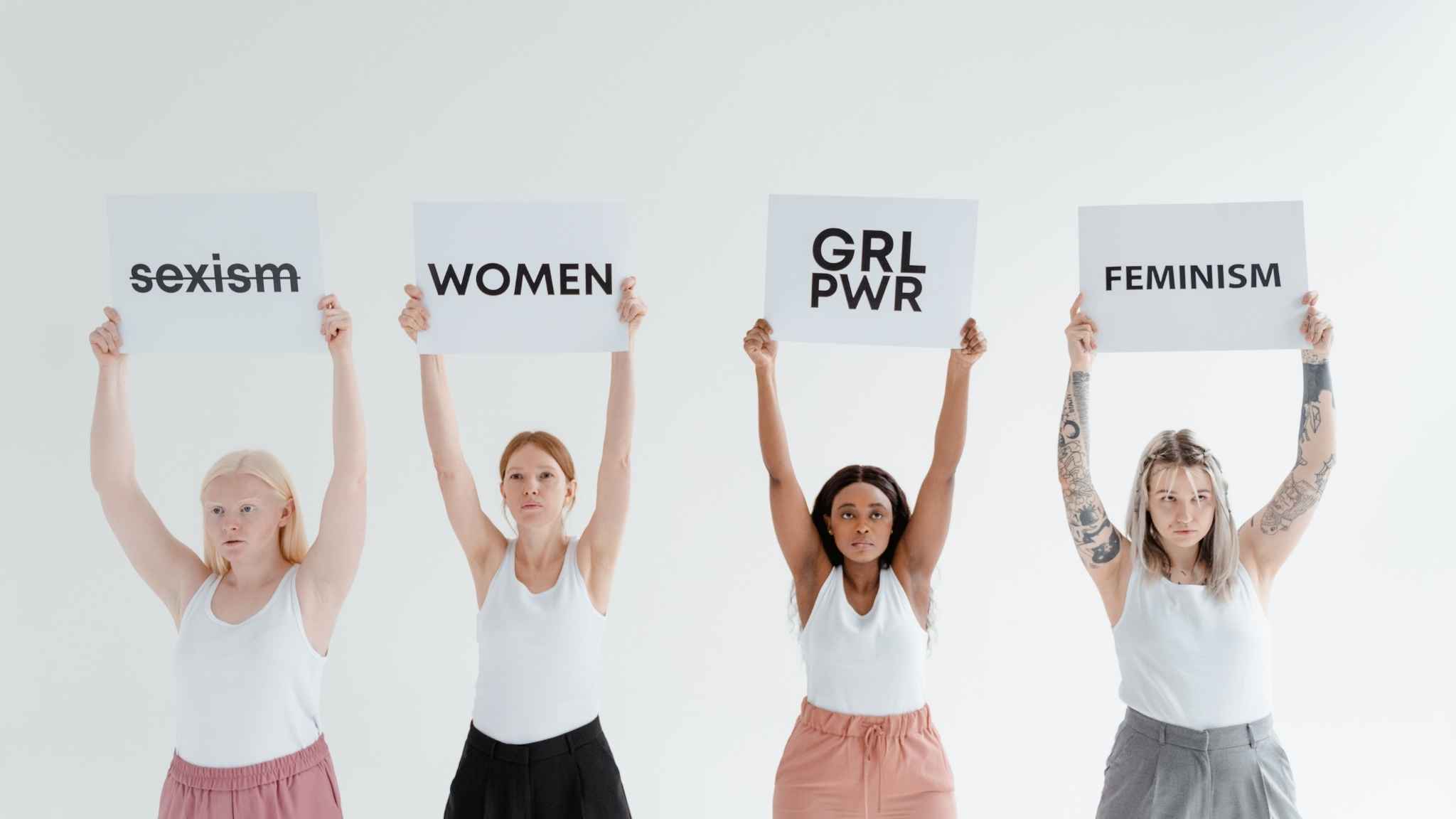
Domestic violence awareness in Australia: the conversation must include every victim.
I am a 36-year-old male, and my aunt was a feminist. When I was a child, my aunt told me about all the issues females faced in the 1960s, back when she was a teenager. Whilst not actually identifying as a male feminist, I did adopt some of the core beliefs of feminism at the time — equality for everyone, regardless of gender. It is something I still truly believe to this day.
Domestic and intimate partner violence is a hot topic on everyone's lips in the 21st century. We have all heard the statistics: one woman a week, one in three women, and many more. However, there seems to be a growing backlash to this awareness campaign. More and more people are asking the questions: what about men? What about lesbians? What about victims of female violence? These are questions we are not too familiar with being asked.
Why are we not used to hearing these questions? And why are we nervous about answering and discussing them?
The Statistics Tell a Different Story
No matter which statistics you use — whether ABS or AIC — it is pretty clear that one in every three victims of intimate partner violence is a man. This rings true even when reviewing old ABS data from the late 1990s. It is a consistent figure all around the world.
Thirty-three percent is not an insignificant amount. When we say that one in three women are victims of violence within our society, we seem to take notice. However, when we suggest that one in three victims of intimate partner violence are male, we tend to focus only on the female component, suggesting that this is overwhelmingly a gendered issue.
Reaching Out for Help
I am a male victim of domestic violence, and when I tried to reach out for help I was faced with a rather unpleasant and crude awakening.
I phoned a few of the toll-free numbers available, such as Mensline and Beyond Blue, only to be told that there was nothing that could really be done for me. On one occasion, I was put through to a phone counsellor. I spent a great deal of time telling my story and explaining all the horrors that our son and I had faced. It was good to be heard; however, the response was something I was not prepared for.
"That's terrible! What did you do to cause her to act in such a way? Is she OK?"
This was the moment of my awakening, and what drove me to where I am today. I was unfortunately born with the wrong genitalia to be considered a victim, nor to be given any empathy.
Searching for Community
For the last three years since, I have spent around four to five hours each and every day studying feminism, domestic violence policy, family law, child protection policy, ABS and AIC statistics, the Duluth model and associated research. I have absorbed the equivalent of gigabytes of data trying to make sense of my treatment. What I found made me very unhappy.
As most do, I went online to discuss my abuse — to find people with a common experience. At first, I struggled to find any groups for male domestic violence survivors; however, there were plenty for women. I joined these groups knowing that people who have been victimised in any way would be sympathetic to others who have experienced similar. The gender of the victim did not seem important to me.
On one of the groups, there was a story about how domestic violence causes long-term effects on the abused. I related to this immediately and shared my story in the comments section. I waited patiently, expecting quite a few replies, as I knew my story was quite horrific.
My notifications on Facebook started running wild. I quickly returned to the page expecting to be greeted with messages of support. However, that was not to be.
"Why are you commenting on this page?"
"And here comes the whataboutery."
"Why are you trying to derail the conversation about the abuse women suffer?"
"TROLL!"
I was quickly blocked and removed from the page. I sat there shell-shocked. What had I done? I was not yet aware that this was a standard experience for male victims online. I had a lot to learn.
It did not matter where I went — White Ribbon, Australian Families, DV Connect — I was greeted with the same narrative. Females are the only victims of domestic violence. And if I dared question it, I would be labelled a whole bunch of nasty names that did not correlate with the person I actually was.
This is the collective experience faced by male victims, female supporters of male victims, and also lesbians. Unless you are a female victim of domestic violence where the perpetrator is male, your story is not wanted. People do not wish to hear it, including female victims. The awareness campaigns out there are equally not interested.
The Answer: Modern Feminism
So after all the studies I have done in the last three years, I feel I have found the answer as to why so many victims are going unheard.
Modern feminism.
Modern feminism does not seem to be what it once was. The definition of feminism is "the advocacy of women's rights on the ground of the equality of the sexes." The problem is, feminism does not seem to share the idea of equality when it comes to the discussion of domestic violence. Feminism strives to keep this a gendered topic — to exclude anyone that can upset the narrative; to silence, humiliate and oppress anyone that upsets their little world where only females can be victims.
They have been very effective at keeping men and lesbians silent on this topic. And I believe I have formulated a very in-depth description on how they have achieved this.
Tactics Used to Maintain the Narrative
Below are the tactics of modern feminism to maintain the narrative.
Only discuss females.
Feminism saturates the media. I don't think that anyone is oblivious to that fact. When the topic of domestic or intimate partner violence is raised in the media, it is heavily pushed to be displayed as a female-only issue. "Violence against women" is the phrase that is now nearly overused in discussing this topic.
Describe feminism as a positive movement.
Feminism likes to describe itself as a movement that brings about positive changes, and whilst empowering women is a good thing, doing it at the expense of men is not. And by silencing male victims, you are disempowering men. However, by promoting itself as a positive movement, it has the effect of making people reluctant to question the motives of feminism.
Demonise those who raise awareness for male victims.
The term MRA (Men's Rights Activist) was coined by men to support male victims of domestic violence. However, feminism has turned this word into a nasty, distasteful word. Being an MRA is akin to being a "rapist" or a "Nazi". This has the effect of people not wanting to be a part of such a group, even though the group is fighting for exactly the same things that feminism is.
Whataboutery.
There are little to no discussions on male victims of domestic violence. When male victims are raised during the topic of female victims, feminists have derived the term "Whataboutery" to once again silence the discussion. However, if men discuss male victims online, not discussing female victims is seen as sexist and misogynistic.
Misrepresent the statistics.
Often you will see statistics about violence against women. However, they have been cleverly displayed to hide the whole truth of the matter.
There is a famous statistic: "One in three women experience violence during their lifetime." This statistic is often used in domestic violence discussions and would have you believe that one in three women experience violence from men. However, this is not true. Over 25% of that number is violence against women, by other women. However, they do not make that known. This hides violence by women.
The same goes for children. Feminists often group women and children statistics together. Child statistics should be separated; however, feminists know that if that were to be the case, child victims of female violence would be shown. So how to overcome that? Group them together.
Blame everything on men.
Lesbians face the highest experiences of domestic violence, yet there are no men around. Feminism is currently working on how to overcome this problem, and the latest trials are to suggest that within lesbian relationships, there is usually one more masculine female that plays the male role. She is adopting patriarchal attitudes and this is the result of men.
There really is no way of men escaping the blame under feminism.
A Call for Inclusivity
These are only a small number of the tactics used by feminists to keep the topic focused entirely on women. It would appear, however, that many people are waking up to the very biased discussions society is having on this topic, and more people are asking to include all victims.
What I suggest is this: never feel bad about discussing a victim of domestic violence. Regardless of the victim's or perpetrator's gender, victims need to be heard.
If feminism is to survive, it needs to change its tactics and become more inclusive, and share the spotlight with the other victims of domestic violence.
— Domestic Violence Awareness Australia
Need Legal Help?
Understand your rights and options
DVAA provides connections to legal professionals who are experienced in these matters.
Complete the legal enquiry form →Comments
VITE_FACEBOOK_APP_ID to enable them.